
Choose One: Reward or Punishment

As a manager you happenstance diverse kind of people with exceptional nature. None of them is same and handling them is not easy. It becomes more difficult when you do the conventional mistake of putting them in friend zone. The key to handle lies in your command and control over your subordinates. Command and control is an art and to master this knack there is a simple rule of REWARD and PUNISHMENT.

It comes to your wisdom that when to reward someone and when to punish someone. It is not necessary that somebody is working just fine and you will reward him. It is also not necessary that if somebody is not at all working then you will punish him. Interesting, isn’t it? Reward and punishment is a game, in which your main objective is to play with the reactions and psychology of your subordinates. Remember one thing, you cannot lose. Defeat is never acceptable in any game which you play as a manager on the professional front.

To give you superior insight of this key to command, I will share a very small and funny example. Recently, I had to spend lot of time in office which meant 24 hours, and got two helpers, one in day time and other one for the night time. Initially, I wasn’t keen to keep them, so I used to call them on hourly basis; this meant they got lot of relaxation time. The helper in day time was undisciplined and the night one was smart and obedient.

Now, after a week I realized that they both were going disorderly. Though the night guy was working OK but still there was a change in attitude and day guy started dictating his conditions on me in a respectful manner. This only implied that I was losing command and control and I had to regain it. I was losing the game and I can’t tolerate losing.


The solution for this was reward and punishment. I started making the day guy to sit for the complete duration on a chair outside my office. The work was same and frankly there was no need to make him sit for such long hours but this was his punishment. Actually, it was his job to be there in day time, but as he was getting relaxation before, now it became pain for him. I continued to stay same with the night guy, and he kept on getting relaxation for the good work. This not only brought the tension between the two but also broke the unity.
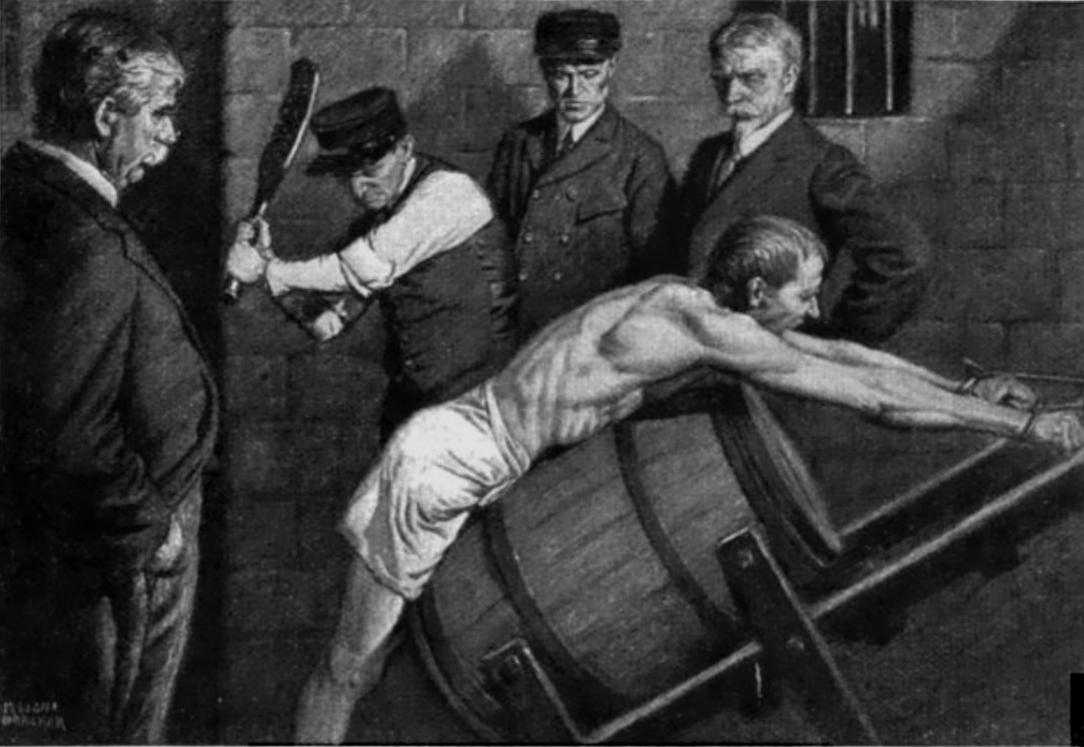

Conclusion was that I regained command and control. The day guy became disciplined as he understood that indirectly he was getting punished and the night guy understood that he may suffer the same. One got punishment and the other got reward and the psychology of human to compare each other made my job easy.

This is the power of Reward and Punishment. Reward one and punish the other. This trick is like walking on a sharp sword, it may back fire on you. You need to decide when and who to reward or punish. A good manager is one who doesn’t lose his calm and remember be ruthless but maintain smile on your face.


‘REWARD OR PUNISH!’

Comments

Popular posts from this blog

The Battle of Longewala

After drifting for approximately thousand kilometers from Alwar, I have reached Longewala. This place romanticizes me allot. The battle of Longewala a legend in itself. It is located at 120 kms from city of Jaisalmer. Only way to reach this place is boulevard and if you are tourist then you have to hire a cab. Longewala is prevalent because of the illustrious skirmish tussled between India and Pakistan in 1971. The clash of Longewala is all about how hundred odd men clogged and overwhelmed approximately 2000 Pakistani legionnaires. This battle was all about the audacity, impetus, chauvinism and drive to prizefight exhibited by those eighty Indian warriors. This scuffle is one of my favorite scuffles, and whenever I come to this place, my mind start envisaging how horde of men repudiated the destiny. During the Indo-Pak war of 1971, A-Coy of 23 Punjab had taken up the defences at Longewala. The A-Coy company commander was Major Kuldeep Singh Chandpuri later on emer...

IS THIS TRUTH OR ANOTHER COMEDY BY PAKISTAN ARMY????

Kashmir War 1947 - 49 By November 1947 Auchinleck, Supreme Commander based in New Delhi, being convinced that Indian Cabinet was seeking to destroy and undo Pakistan by economic and military means, was forced to resign. As the build-up of Indian forces in Jammu and Kashmir continued, Pakistan Army units were being hurriedly organized and equipped without any base for manufacture of ammunition, signal stores, equipment or vehicles. Simultaneously, Pakistan National Guards were raised from ex-servicemen and other volunteers along border areas to provide a second line of defence. By February 1948 Indian build up in Jammu and Kashmir reached five brigades plus, under two full-fledged division Headquarters. Our 101 Brigade, commanded by Brigadier Akbar Khan was rushed into the critical front to forestall and halt the Indian offensive along Uri-Muzaffarabad axis. In April 1948, Commander-in-Chief Pakistan Army appreciating the threats in the north along Muzaffarabad-Kohala...

INDIAN AIR FORCE ADOPTS 'GO GREEN TREND'

Mission Accomplishment Paramount Even as IAF Initiates ODS Alternatives in Weapon Systems The Indian Air Force (IAF) is adopting a multi-pronged strategy to combat ozone depletion including limiting the use of Halon to mission critical uses, tighter control laws and incorporating accountability towards phase-out of ODS (Ozone Depleting Substances) said Air Chief Marshal PV Naik while delivering the inaugural address at the two-day International Workshop on ‘Benefits of ODS Phase-out in Defence Forces’ organized by Centre for Air Power Studies (CAPS), today. Air Chief Marshal P.V. NAIK While highlighting initiatives taken by the IAF, and encouraging alternatives, the Air Chief however, clarified, “Mission accomplishment remains paramount for the Armed Forces. Substituting an ODS would only be done, if it doesn’t impinge on operational effectiveness of the system in question.” For new weapon systems in the pipeline, inclusion of a clause in RFPs for provision of alter...